
Bali


After several highly successful editions, SILMO Academy continues its mission of excellence, education, and knowledge sharing in service of vision care and optical professionals.
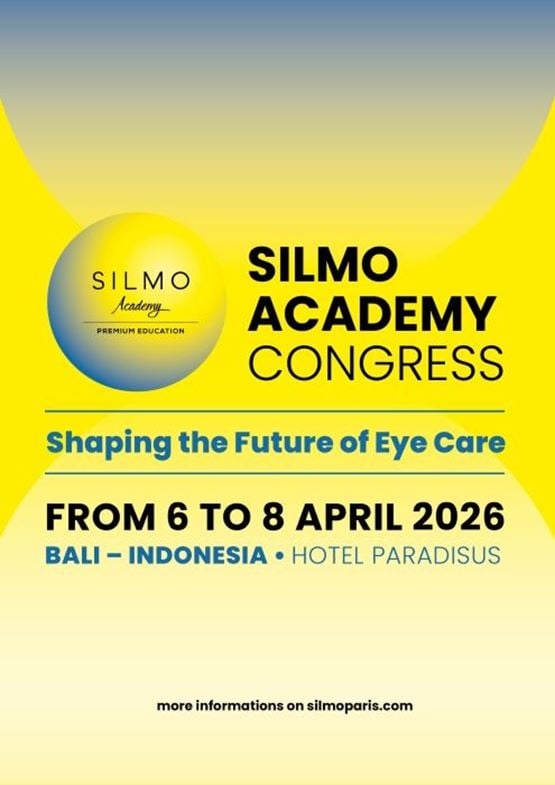
In 2026, an ambitious new milestone awaits: for the very first time, SILMO Academy will take place in Bali as part of an international congress dedicated to visual health, research, and innovation.
Over three days, from April 6 to 8, 2026, international experts, researchers, educators, and practitioners will come together to explore, learn, and exchange ideas on the key challenges shaping the future of optics and optometry.
A scientific program of excellence
A CPD-accredited congress, supported by the active involvement of numerous regional professional associations. This edition will be structured around five thematic sessions:
- Putting people at the heart of professional practice :
Placing the individual at the center of optical practice and patient care. - Healthy aging and presbyopia
Exploring preventive and therapeutic approaches to the visual challenges associated with aging. - Enhancing competitiveness in professional practice
Strengthening performance, differentiation, and long-term sustainability of professional practices. - Light management
Understanding, anticipating, and controlling the effects of light on vision and ocular health. - Future advances in optometry and optics
A forward-looking perspective on emerging technologies and research that will transform the profession.
-
April 6th
-
April 7th
-
April 8th
-
9 - 12 AM: Delegates registration
Session 1: Putting people first
-
1 - 1:50 PM: Avoiding conflict - Real cases from the UK Optical Consumer Complaints Service - Richard Edwards
Abstract:
In this highly engaging session Richard Edwards will give an overview of the optical complaint landscape from the UK sector, identify future trends and share a methodology by which to manage complaints to a successful conclusion. Richard will also share insights from the significant reduction in UK FtP cases over recent years.
Learning Objectives:
- I understand the nature & trends of optical complaints from the UK optical industry
- I have a methodology I can now apply to a future complaint
- As a result of 1&2 I am more confident in managing complaints in the future
-
1.50 - 2.40 PM: Supporting neuro-diverse patients in optical practice - Lana Delambre
By the end of this lecture, participants will be able to:
1. Foundations of Neurodiversity in Optometry
- Describe the concept of neurodiversity and its relevance within optometric care.
- Identify common neurodevelopmental and neuropsychiatric conditions seen in clinical practice, including anxiety disorders, Tourette syndrome, OCD, autism, and ADHD.
- Recognise how sensory, cognitive, and behavioural differences influence patient experiences in eye-care settings.
2. Condition-Specific Clinical Considerations
- Explain how anxiety, Tourette syndrome, OCD, autism, and ADHD may affect patient communication, attention, sensory tolerance, and test performance.
- Anticipate common challenges during case history, refraction, ocular assessment, and diagnostic procedures for each condition.
- Apply evidence-informed strategies to reduce distress, manage tics or compulsions, support attention, and accommodate sensory sensitivities.
3. Communication and Rapport-Building
- Utilize person-centred, trauma-informed communication approaches that foster trust with neurodiverse patients.
- Modify instructions, pacing, and visual/verbal information to enhance patient understanding and comfort.
- Demonstrate strategies for collaborating effectively with caregivers, support persons, or interpreters when appropriate.
4. Creating Inclusive Clinical Environments
- Assess environmental factors in optometry clinics that may trigger sensory overload or anxiety.
- Implement practical adaptations (lighting, noise management, scheduling flexibility, exam-room setup) to improve accessibility and reduce barriers.
- Develop policies and workflows that proactively accommodate neurodiverse patients.
5. Clinical Decision-Making and Patient Outcomes
- Integrate accommodations into clinical decision-making while ensuring accuracy of refraction, ocular health evaluation, and diagnostic results.
- Evaluate how inclusive practices improve patient satisfaction, adherence, and clinical outcomes.
- Formulate a personalized accommodation plan for neurodiverse patients in routine and advanced optometric care.
6. Professional Growth and Advocacy
- Reflect on biases and assumptions that may impact care for neurodiverse patients.
- Advocate for inclusive, respectful, and equitable care within optometric practices and the broader healthcare system.
- Identify resources, guidelines, and continuing education opportunities to expand competency in neurodiversity-affirming care.
-
2.40 - 3.10 PM: Coffee break
-
3.10 - 4 PM: Person-centred care and critical services to the ageing population – are we ready? - Pr. Daniela Nosch
ABSTRACT:
Awareness for the necessity for regular eye examinations to prevent and address visual impairment during ageing is unfortunately low in both, the general population and the involved health care professions. Untreated vision loss has significant impact on wellbeing, independence, and quality of life for healthy ageing, and it has been added for the first time as a modifiable risk factor for dementia in the 2024 report of the Lancet standing Commission. As demographic changes progress, the population of older individuals experiencing age-related vision loss and impairment is expected to continue to grow in the coming years. The current global estimate projects that the number of individuals with moderate to severe VI will surge to 588 million by 2050.
This lecture will summarise the unmet need for interdisciplinary collaboration between healthcare professions to better address visual impairment in the ageing population, by regular eye examinations, provision of adequate vision aids (such as spectacles and low-vision aids), better lighting conditions and suitable infrastructure in residential care facilities / homes of the elderly population.
The role of optometrists and opticians in prevention goes beyond vision: They need to be aware and take a holistic approach by integrating sensory health into their practice. They are easily accessible and hence in an ideal position to improve vision services to the ageing population as both, primary eye care provider and by collaborating with other health care providers.
Learning objectives
At the end of this lecture the attendee will be able to:
- Recognise the significant impact of untreated vision loss on wellbeing, independence, and quality of life for healthy ageing.
- Identify measures to address visual impairment in the ageing population in everyday optometry and optics practice.
- Value the importance of interdisciplinary collaboration with other healthcare professions to better address visual impairment in the ageing population.
-
4 - 4.50 PM: Burn out of optical professionals – the changing landscape of employee care - Pr. Fiona Fylan
Abstract:
There is increasing evidence of the impact of work-related stress in optical professionals. Around a third report symptoms of moderate-to-severe psychological distress, including anxiety and depression. Around 20% report taking time off work because of stress.
Interventions to tackle work-related stress typically focus on strategies that help individuals to better manage their mental health but we need to know more about which strategies work, and what actions employers can take to prevent burnout and protect the mental health and wellbeing of their professionals. This session explores the results from several international studies of burnout in optical professional. The findings show that addressing work-related stress requires a collaborative approach in which individuals adopt personal coping strategies, and employers and the profession implement protective strategies that include commercial expectations, clinic management, and workplace culture.
Learning Objectives – increase awareness of the:
- Causes and symptoms of work-related stress.
- Individual strategies that can protect against work-related stress.
- Actions that employers can take to reduce work-related stress and protect employees from burnout.
-
4.50 - 5.15 PM : Panel discussion
-
Evening - Get together drinks reception - Delegates, lecturers and partners
Session 2: Healthy ageing and presbyopia
-
9 - 9:05 AM: Why Healthy Ageing is Important: The WHO Work Plan - Elaine Grisdale
ABSTRACT:
2026 sees us passing the half-way mark of the World Health Organisation’s decade of Healthy Ageing, the second action plan of the WHO Global strategy on ageing and health. Designed to improve the lives of older people, their families and their communities in a period in history where we are all living longer, this presentation will detail the WHO plan of action which is bringing together stakeholders from many different disciplines such as politicians and policy makers, international agencies, professionals, academics, people in the media and private sector actors.
The presentation outlines the guiding principles for the decade of healthy ageing and the relevant sustainable development goals and indicators that are required for people to age with good health. The societal impact of ageing well will be discussed and in particular, what role eyecare professionals can play and and how we can contribute to this important global initiative.
Learning Objectives:
- Understand how healthy ageing is defined
- Recognise the importance of healthy ageing and the positive impact it has on the fabric of society.
- Identify ways in which eye professionals can play a major role in detection and management of age-related conditions to improve quality of life and independence for patients in our care.
-
9.05 - 9.45 AM : Visual Capacity of Elderly Patients - Pr. Algis Vingrys
-
9.45 - 10.30 AM: Why is this Still in Hospital? A New (Zealand) Approach to Eye Care. - Jason Dhana
Abstract:
This presentation explores New Zealand’s optometry-led model as a practical solution to hospital overload in ageing eyecare. With prescribing rights, access to advanced imaging, and structured co-management agreements, New Zealand optometrists are already delivering early intervention and chronic disease management outside hospital walls. This session offers a roadmap for shifting eyecare closer to home while maintaining safety and quality.
Learning outcomes:
- Identify which eye conditions can be safely managed in optometry rather than hospital care
- Describe key components and examples of successful and effective communityhospital co-management pathways
- Recognise the training and system requirements needed for optometrists to take on extended clinical roles and reduce the burden on public health systems
-
10.30 - 11 AM: Coffee break
-
11 - 11.45 AM : What we know about vision impairment and blindness at population level - Pr. Rupert Bourne
What we know about vision impairment and blindness at population level- how the Global Vision Database has transformed our knowledge of the changing contribution of different causes of vision loss over the past 30 years and emerging trends- with a particular focus on effective Refractive Error Coverage, the first eye metric to be included in the WHOs Fourteenth General Programme of Work (2025-2028).
ABSTRACT:This talk by the lead of the Vision Loss Expert Group (VLEG), Professor Rupert Bourne, will explain:
- How the Global Vision Database has been curated over 15 years with data from more than 600 population-based eye surveys, by VLEG, the principal ophthalmic epidemiology reference group.
- How the contributions of various causes including uncorrected refractive error to vision impairment have changed over the last 30 years and projections to 2050.
- How this data has informed the WHO and Global Burden of Disease study and how one can access region and country-specific data through the Vision Atlas, a collaboration between VLEG and the International Agency for Prevention of Blindness.
- The recent inclusion of effective Refractive Error Coverage as the first eye-related metric to be included in the WHO’s Fourteenth General Programme of Work (2025-2028).
- Barriers to spectacle correction, interventions to improve coverage and factors associated with vision impairment such as dementia
-
11.45 - 12.30 PM: Creating a dementia friendly practice – Experiences from Australia - Dr. Marianne Coleman
Abstract:
Looking after sensory health helps people with dementia maintain their independence and to take part in other rehabilitation and wellbeing programmes. For this reason, it is recommended that people with dementia seek an eye test after diagnosis, to establish a baseline, and to continue having regular eye tests. This is reflected in NICE Guidelines in the UK, and is recommended by dementia support organisations in a number of countries. However, people living with dementia are at greater risk of experiencing preventable sight loss, compared to people without dementia. This is because people living with dementia experience barriers to accessing eyecare, including difficulties with finding an optometrist who knows about dementia. In addition, sight loss later in life is a modifiable risk factor for dementia. Thus optometrists have a vital role in both dementia prevention and in post-diagnosis dementia care.
To upskill and empower the optometry workforce to work confidently with people living with different types and severities of dementia, this presentation will cover the following topics:
- Basic introduction to dementia and types most commonly encountered in clinical practice (with or without a formal diagnosis)
- Communication strategies and dementia-friendly language
- Top tips for adapting the eye examination to accommodate dementia, including the role of carers
- Changed behaviours in dementia, what to look for and mitigation strategies
- Signposting to resources
Learning Objectives:
- Understand the different types of dementia and common presenting features
- Apply knowledge of how dementia can impact the routine eye examination to adapt communication and testing during the consult, and eyecare advice provided
- Know where to find resources and further training about dementia
-
12.30 - 1PM : Panel discussion
-
1 - 2PM : Lunch
Session 3: Gaining a competitive edge in practice
-
2 - 2.50 PM: Contact lens discomfort or dry eye disease? How to tell the difference. - Pr. Eric Papas
Abstract:
Discomfort during contact lens wear is common and a frequent cause of dissatisfaction, reduced wearing time and discontinuation. Although there are sometimes similarities in terms of symptoms, contact lens discomfort (CLD) and dry eye disease (DED) represent distinct conditions each with a clear definition. Confusion on this point among clinicians (as well as educators and researchers), creates the potential for misdiagnosis and consequently, inappropriate treatment assignments which are therefore ineffective. The presentation aims to reduce misunderstanding in this area by reviewing the features of CLD and DED, then describing a diagnostic schema to assist their clinical discrimination as the basis for designing an effective treatment strategy in each case.
Learning objectives:
- Learn how to recognise contact lens discomfort and how to distinguish it from dry eye disease
- Understand the prevalence of contact lens discomfort and dry eye disease
- Update on recent research into the causes of contact lens discomfort
-
2.50 - 3.40 PM: Find your competitive advantage - Stephen Caunter
Abstract:
What makes your or any business successful? Hard to answer because there are so many ways to measure success. So to be successful we will first look at defining the measures of success that matter. Some of these are going to mean comparing yourself to the competition and knowing what makes you famous. With this knowledge you can tap into more customers and become more successful. Still looking for that nugget that sets you apart? Let’s explore your market, your people, your customers and their habits.
Being famous for something is your competitive advantage, be proud of it and tell the world.
Learning objectives:
- Identifying measures of success within a practice. Having a business strategy that focuses on the things that matter to be successful.
- Understanding the different strategies that can be employed to have a competitive advantage and why some are better long term than others.
- Using measuring and testing to fine tune marketing strategies so you can find what works the best for you.
-
3.40 - 4.10 PM: Coffee break
-
4.10 - 5 PM : Managing Complications in Contact Lens Fitting - Gabrielle Janssen
-
5 - 5.50 PM: Adapting contact lenses for children from A to Z - Philippe Seira
Learning objectives:
- Which contact lens indications are most relevant for children and teenagers
- What are the best communication tools for young contact lens wearers
- How to ensure good compliance and prevent the risk of infection in young people
Abstract:
In selected paediatric populations, contact lenses may offer significant visual, functional and therapeutic advantages over spectacles. This presentation explores the clinical indications for contact lens fitting in children, ranging from common refractive errors and myopia management to more complex conditions such as congenital cataract, anisometropia, amblyopia, high ametropia and nystagmus.
Different contact lens modalities will be reviewed, including soft lenses, rigid gas-permeable lenses, orthokeratology and specialty designs, with emphasis on their clinical rationale, benefits and limitations in paediatric patients. Key factors influencing successful fitting — including age, ocular health, compliance, hygiene management and parental involvement — will be discussed.
Particular attention will be paid to risk assessment, safety considerations and complication prevention, recognising that paediatric contact lens practice requires a very low tolerance for avoidable risk. Finally, the presentation will address communication strategies tailored to children and their families, aiming to support informed decision-making, realistic expectations and safe long-term contact lens wear.
-
5.50 - 6.15 PM : Panel discussion
-
Evening cocktail –delegates, lecturers and partners
Session 4: Light management
-
9 - 9.50 AM: Beyond Refraction – Building Trust - Dr. Byki Huntjens
ABSTRACT:
Confidence and trust are central to every successful patient journey; but how are they built, where are they lost, and what role do we all play in shaping them? This session explores the critical relationships between patients, eye care professionals, support staff, business owners, and industry partners. Through key psychological concepts and personal reflection, we will recognise how trust impacts clinical outcomes, patient satisfaction, and business success.
CPD domains: professionalism (s.4 and s.10) and communication (s.2).
-
9.50 - 10.40 AM: Light and myopia - Pr. Weizhong Lan
Abstract:
Light is believed to play an important role in myopia development. Studies regarding light and myopia could be dated back to centuries ago. However, there are still a lot of questions waiting for resolve. The presentation will review the relevant literature, from animal to human studies, to demonstrate those already known as well as those needed further investigation.
-
10.40 - 11.00 AM: Coffee break
-
11.10 - 12 PM: The future’s so bright I’ve got to wear shades - Pr. David Elliott
Abstract:
The future for most of us will involve cataracts and the associated glare and vision loss. The lecture summarises how vision is reduced in different ways by the age-related cataract morphologies of cortical, nuclear and posterior subcapsular cataract. It will also detail how different tints and filters can improve vision for each cataract morphology and potentially avoid further deterioration of some cataracts. The famous impressionist artist Claude Monet will be used as one example of how vision can be affected by cataract and how tints can help.
Reference: Wildenstein D. Monet. The Triumph of Impressionism. Taschen: Koln, 2025.
Learning Objectives:
- To understand how vision is lost with different cataract morphologies
- To understand how Claude Monet’s nuclear cataracts affected his later paintings and how tinted lenses improved his vision
- To understand how various tints and filters can improve vision with different cataract morphologies
-
12 - 12.50 PM: The optical ecology of childhood vision: how light, distance and behaviour shape refractive development - Dr. Grant HannafordAbstract:
Refractive development in childhood is governed by a dynamic interaction between ocular growth and the visual environment. The process of emmetropisation relies on coordinated changes in axial length, corneal power, and lenticular development, guided by visual feedback mechanisms that remain sensitive throughout early and mid-childhood. Disruption to this process can result in refractive error, with increasing evidence implicating environmental and behavioural factors as key modulators of refractive outcomes.
This presentation explores the concept of the optical ecology of childhood vision, examining how light exposure, viewing distance, and habitual visual behaviour influence refractive development. Drawing on contemporary biometric and epidemiological research, the talk will outline the physiological mechanisms underpinning emmetropisation and the conditions under which this process may be interrupted or destabilised. Particular emphasis is placed on the role of outdoor light exposure, near work demand, and visual task structure in shaping axial growth trajectories.
Clinical implications for optometric practice are discussed, with a focus on practical strategies for modifying a child’s visual environment to support healthy refractive development. These include evidence-based recommendations for light exposure, working distances, and behavioural interventions that can be implemented alongside conventional clinical management. By reframing refractive development within an ecological context, this session aims to equip practitioners with a deeper understanding of how everyday visual environments can be leveraged to promote positive refractive outcomes in children.
-
12.50 - 1.15 PM: Panel discussion
-
1.15 - 2.15 PM: Lunch
Session 5: Future advances in optometry and optics
-
2.15 - 3.05 PM: Perspectives for AI in clinical practice - Gabrielle Janssen
ABSTRACT:
Artificial Intelligence (AI) is rapidly transforming the landscape of healthcare — and eye care is no exception. This presentation explores how AI can enhance clinical practice in optometry and optics, from early disease detection to personalized treatment and improved access to care. With a growing and aging population, uncorrected refractive errors, and shortages in the health workforce, the integration of AI offers both opportunities and challenges. Participants will examine how optometrists can become “co-intelligent” with AI, balancing technological innovation with empathy, professionalism, and human connection. Through real-world examples and discussion, we will reflect on the evolving role of the eye care professional in an AI-driven era.
By the end of this session, participants will be able to:
- Identify key areas where AI technologies are already impacting optometry and optical practice, including diagnostics, patient interaction, and workflow efficiency.
- Evaluate the ethical, educational, and professional implications of adopting AI tools in clinical decision-making and patient care.
- Develop strategies to integrate AI responsibly into practice while maintaining the human touch and core competencies of the optometric profession.
-
3.05 - 3.55 PM: Is the sector ready for AI and the smart eyewear revolution? - Sébastien Brusset
Abstract:
The integration of artificial intelligence (AI) technology in smart eyewear has brought forth a new wave of possibilities and capabilities. This conference aims to explore the intersection of AI and smart eyewear, showcasing the latest advancements, challenges, and opportunities in this rapidly evolving field. As an experts from eyewear industry, and based on discussions with the Silmo Experts Committee, I will present the research on how AI is transforming the way we interact with smart eyewear devices, revolutionizing user experience, enhancing accessibility, and opening up new horizons for various applications. Join us as we delve into the future of wearable technology and the innovative ways AI is shaping the smart eyewear revolution.
-
3.55 - 4.25 PM: Coffee break
-
4.25 - 5.15 PM: The evolution of medico-optometry: how med-tech in ophtalmics is disrupting the optometric paradigm - Thao HannafordCette conférence explorera l'évolution du paysage de l'optométrie et la manière dont les innovations et recherches actuelles en optique ophtalmique bouleversent le paradigme optométrique. L'accent sera mis plus particulièrement sur le développement des verres ophtalmiques et l'intégration de la médico-optique dans la pratique, où les cabinets s'éloignent d'un modèle commercial pour offrir aux patients de meilleurs résultats cliniques.
-
5.15 - 6.05 PM: Using technology to revolutionise low vision and hearing solutions - Iwan Zanchetta
Technological breakthroughs are rapidly reshaping how we approach sensory care — especially for people living with low vision and hearing impairment. This presentation explores the latest innovations in assistive technology, including AI-based visual aids, wearable systems, smart hearing solutions, and integrated digital tools. Participants will gain insights into how these technologies can enhance independence, participation, and quality of life for individuals with sensory loss, while also understanding the practical role optometrists can play in guiding effective adoption.
By combining real-world examples with clinical relevance, the session will demonstrate how optometrists can support patients in navigating the complexity of modern assistive devices and services. Attendees will leave with actionable strategies for integrating technological solutions into everyday practice, reinforcing the importance of human-centred care alongside innovation.
-
6.05 - 6.30 PM: Panel discussion
Speakers
Join our 20 renowned international experts in optometry, optical dispensing, ophthalmology, and eye health for a world-class scientific program and enhance your professional skills!

A deep breath of Bali
The SILMO Academy Bali conference will take place at the Paradisus by Meliá Bali hotel. Located on the shores of Nusa Dua, Paradisus Bali is where your story on the island begins. Much more than just accommodation, this five-star resort is a true sanctuary, inspired by the spirit of Bali. From design influenced by local culture to seasonal flavors, every moment is thoughtfully crafted in perfect harmony with the destination.